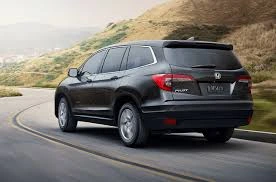
Honda CR-V Overview
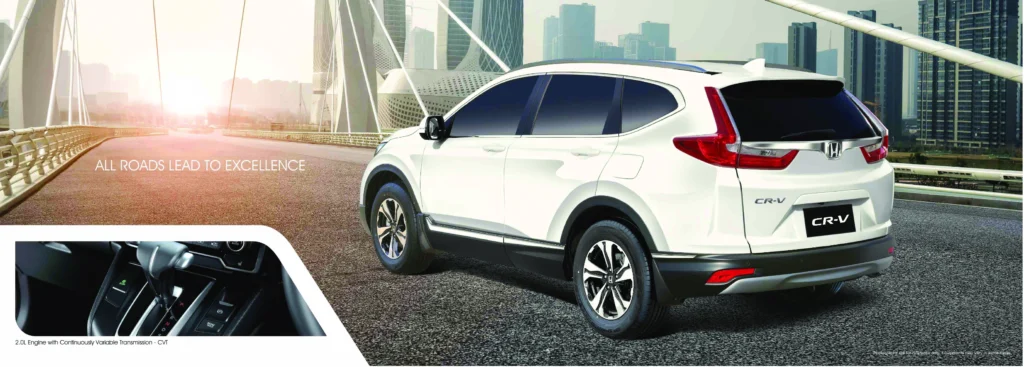
The used Honda CR-V is a crazy car. Back in 1995, Honda decided to shake things up in the SUV world with the CR-V. It was Honda’s smart move to grab a piece of the growing crossover pie. They squeezed it right between their smaller HR-V and the bigger Pilot, creating what they called a “Comfortable Runabout Vehicle.”
Here’s something interesting: Honda built the CR-V on their trusty Civic bones. Smart thinking, really. Why reinvent the wheel when you’ve got a solid foundation that already works? This approach kept costs reasonable while maintaining Honda’s rock-solid reputation for reliability.
The real game-changer came in 2016 with the fifth generation. American buyers went absolutely crazy for this version. Sales numbers shot through the roof, making it clear that Honda had struck gold with this particular iteration.
Honda CR-V Exterior Design Philosophy
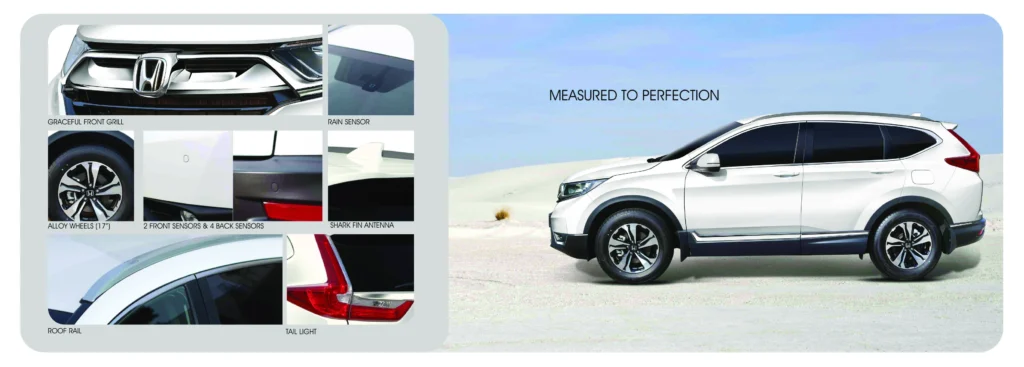
One look at the CR-V and you’ll immediately recognize Honda’s signature style. That big chrome grille up front? Pure Honda DNA. They’ve flanked it with LED daytime running lights that give the whole face a modern, alert expression.
Walk around to the side and you’ll notice how the rear quarter window cuts away sharply. It’s a bold design choice that adds some attitude to what could otherwise be just another boring family hauler. The designers clearly wanted this thing to look dynamic, not sleepy.
Around back, there’s this horizontal line running between the taillights that Honda borrowed from their Civic playbook. The taillights themselves stand almost upright, kind of like what you’d see on a Honda FIT. Those dual exhaust tips at the bottom? They’re Honda’s way of saying “Hey, this isn’t just about hauling groceries.”
Interior Refinement and Comfort Features
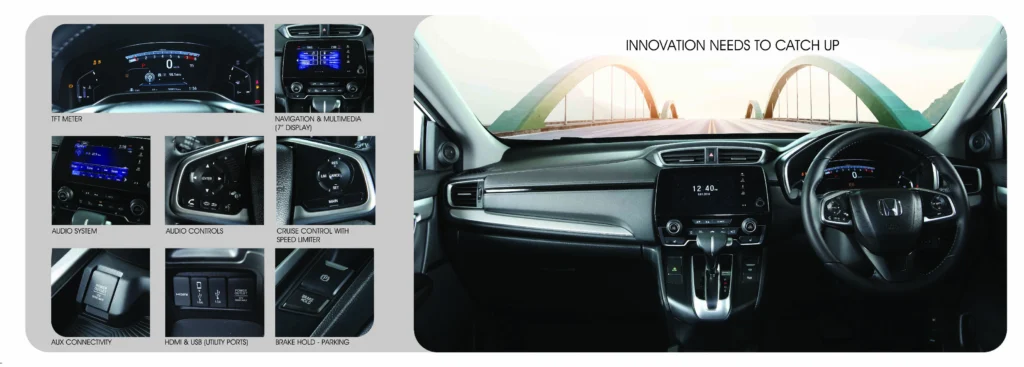
Step inside and you’re greeted by leather pretty much everywhere your hands and body touch. Honda wasn’t messing around when they designed this cabin – they wanted it to feel upscale without breaking the bank.
The dashboard ditches old-school analog gauges for a digital setup that looks surprisingly similar to what you’d find in a Civic. Makes sense when you think about it – why complicate things across different models? The front seats heat up and adjust electronically, which is pretty sweet for a mainstream crossover.
What really caught my attention is the two-tone leather treatment up front. It’s not just black everywhere – there’s some visual interest that makes the cabin feel less monotonous. The dual-zone climate control means you and your passenger can finally agree on temperature, ending those eternal car arguments.
Honda’s infotainment system sits prominently in the center, though they wisely kept some physical buttons for things you actually need to adjust while driving.
Powertrain Options and Performance Characteristics
Depending on where you live, Honda offers different engine choices. Some markets get petrol, others diesel, and the lucky ones get hybrid options. It’s Honda’s way of keeping everyone happy while meeting local regulations and preferences.
The 2.0-liter engine that many CR-Vs come with produces 113 horsepower at 6,500 rpm and 189 Nm of torque at 4,300 rpm. These aren’t tire-smoking numbers, but that’s not really the point. This engine prioritizes smoothness and reliability over raw acceleration – exactly what most families actually need.
The automatic transmission pairs nicely with this engine philosophy. Shifts happen without drama, keeping passengers comfortable rather than providing sporty thrills.
Fuel Economy and Efficiency Metrics
In city driving, expect somewhere between 10-12 kilometers per liter. Not amazing by today’s standards, but reasonable considering the CR-V’s size and capability. The 57-liter fuel tank gives decent range between fill-ups, though you’ll definitely notice fuel costs if you’re doing lots of city driving.
For families doing regular commuting and weekend trips, these numbers work out to manageable monthly fuel bills without requiring constant stops at gas stations.
Competitive Landscape Analysis
The CR-V doesn’t really have perfect competitors, which is both good and bad news. Based on pricing, you’re looking at vehicles like the Toyota Fortuner, Kia Sorento, and Haval H6.
The Toyota Fortuner takes a completely different approach – it’s built like a truck with serious off-road chops. If you actually need to haul boats or tackle rough terrain regularly, the Fortuner makes more sense. It’s got the space and power but drinks more fuel and rides rougher on pavement.
Kia’s Sorento goes head-to-head with the CR-V more directly. It’s refined, loaded with tech features, and offers that smooth ride families appreciate. The infotainment system often gets better reviews than Honda’s, and Kia’s warranty coverage is hard to beat.
The Haval H6 represents the new wave of Chinese automotive brands. You get a lot of features for less money, plus styling that looks surprisingly modern. The question mark remains long-term reliability, though early reports seem promising.
Technical Specifications
| Body Type | SUV |
| Dimensions (Length x Width x Height) | 4591 x 1855 x 1679 mm |
| Ground Clearance | 192 mm |
| Displacement | 1997cc |
| Horse Power | 113hp |
| Transmission | Automatic |
| Boot Space | 522 L |
| Torque | 189 Nm |
| Kerb Weight | 1474 Kg |
| Fuel | Petrol |
| Milage | 10-12 KM/L |
| Fuel Tank Capacity | 57 L |
| Seating Capacity | 5 Persons |
| Top Speed | 180 KM/H |
| Tyre Size | 235/65R17 |